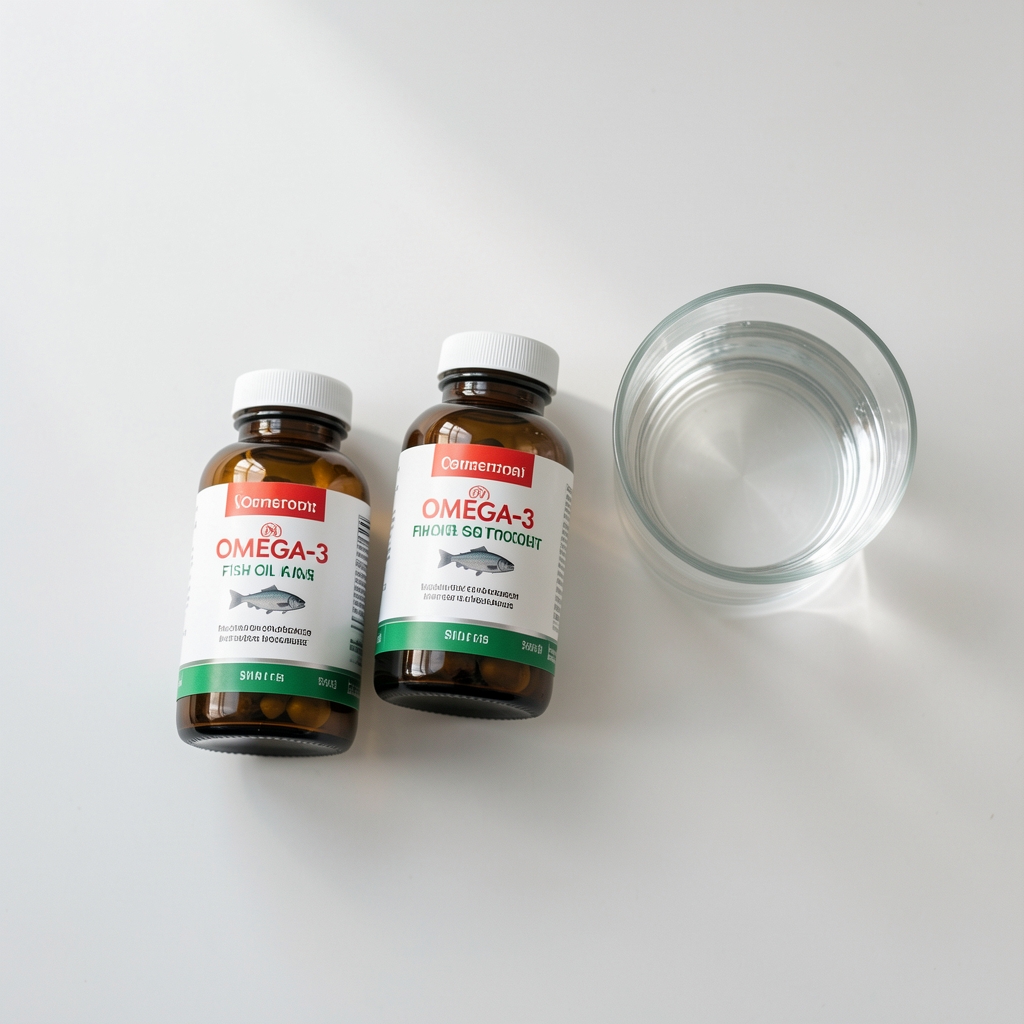
Recovery Nutrition
Omega-3 and Recovery in the Active Man's Routine
Marcus Webb
·
·
10 min read

The pairing of vitamin D and magnesium appears with some regularity in discussions of men's nutritional habits — two nutrients whose roles in daily energy rhythm and physical recovery have attracted consistent attention in published nutritional research over the past decade.
When active men begin observing their supplement habits with any seriousness, the question of where to begin tends to surface early. A full supplement stack of eight or ten compounds can seem formidable for someone new to intentional daily nutritional habits. The editorial observation across many published accounts is that starting with two well-documented nutrients — rather than attempting a broad stack from the outset — produces more consistent daily practice.
Vitamin D and magnesium represent a logical pairing from a nutritional standpoint. Vitamin D supports daily energy rhythm and overall nutritional balance. Magnesium supports muscle recovery rhythm after physical activity. Together, they cover two of the more commonly observed nutritional gaps in active men's daily habits: morning energy awareness and post-training recovery support.
This is not a directive. It is an editorial observation from reviewing published nutritional literature and tracking the supplement habits of active men over time. The consistency with which these two nutrients appear — both in published research on men's nutritional habits and in the daily supplement records of active individuals — is notable enough to warrant its own extended field note.
"The supplement habit, when observed carefully, reveals consistent patterns across men of different activity levels and dietary backgrounds."
Vitamin D has been one of the most discussed nutrients in wellness publishing over the past fifteen years. Its prominence in the editorial conversation around men's supplementation is not incidental — the published nutritional research pointing to its role in energy rhythm, immune awareness, and overall nutritional balance has expanded considerably since 2010.
For active men in Southeast Asian climates, including Indonesia, the question of vitamin D status is worth noting. While equatorial geography offers greater year-round sun exposure than northern latitudes, patterns of indoor work, air-conditioned environments, and office-based daily routines can reduce practical sun exposure significantly. The editorial conclusion from reviewing published research is that monitoring vitamin D as part of a nutritional awareness practice — rather than assuming adequacy — is a reasonable default for active men regardless of geography.
In the daily supplement journals reviewed for this publication, vitamin D appears most frequently as a morning supplement, taken alongside the first meal of the day. This timing pattern aligns with published guidance from independent nutritional sources, which notes that fat-soluble nutrients — vitamin D among them — are generally absorbed with greater efficiency when taken alongside a meal containing dietary fat.

Vitamin D in the morning routine — Jakarta, January 2026
Magnesium is one of the more under-observed nutrients in the average active man's supplement awareness. The published nutritional research on magnesium's contribution to muscle recovery rhythm is extensive and well-established, yet it consistently ranks below higher-profile compounds in the attention given to it in popular wellness writing. This publication takes a different view.
In the context of resistance training, endurance activities, and the physical demands of an active daily routine, magnesium's role in supporting muscle recovery rhythm after physical activity is well-documented in published literature. The editorial approach here is to observe rather than prescribe: the pattern of active men reporting improved recovery awareness after introducing consistent magnesium supplementation is sufficiently common in published accounts to merit sustained editorial attention.
Magnesium appears in the daily supplement records of active men in a variety of forms. The published nutritional literature notes meaningful differences in bioavailability between magnesium glycinate, magnesium citrate, and magnesium oxide — differences that are worth understanding when selecting a form for daily use. This field note does not endorse any particular product; the observation is simply that form matters when considering magnesium as part of a daily stack.
The most common stacking pattern observed in active men's supplement journals involves vitamin D in the morning and magnesium in the evening. This timing pattern reflects an intuitive separation of their principal contributions: vitamin D supporting the energy rhythm of the waking hours, magnesium supporting the recovery rhythm of the night.
There is a secondary consideration in the published research worth noting here. Vitamin D and magnesium appear to have a relationship in terms of their nutritional interplay. Several published nutritional studies have observed that adequate magnesium status may influence how vitamin D is processed in the body — a relationship that makes the pairing of these two nutrients in the same daily stack logically coherent from a nutritional standpoint, not merely a convenient editorial simplification.
The practical implications for daily supplement habits are modest. For men new to intentional supplementation, beginning with these two nutrients before expanding to a broader stack provides a manageable entry point. For men already using a broader stack, verifying the presence and timing of both vitamin D and magnesium is an exercise worth undertaking as part of a periodic review of supplement habits.
The editorial perspective of Orano Field Notes is that supplement awareness is most usefully approached as a long-term daily practice rather than as a short-term intervention. The nutritional habits that produce the most consistent observations in published research are those maintained over months and years, not days and weeks. This is especially true for nutrients like vitamin D and magnesium, where daily consistency is a more relevant variable than acute dosing.
Building a two-nutrient starting stack also serves a useful journalling function. When a man begins tracking only two variables in his supplement routine, the observations he records over the first several weeks are cleaner and easier to interpret. Introducing eight or ten compounds simultaneously produces observations that are difficult to attribute meaningfully to any single addition. Starting with two creates a readable record.
The recommendation from the editorial team at Orano Field Notes, when considering any new addition to a daily nutritional routine, is to speak with a qualified wellness or nutrition professional before introducing any new habit or routine to daily life, particularly if specific dietary requirements are a factor. This publication records observations; it does not prescribe actions.

Daily supplement journalling — a starting practice
The vitamin D and magnesium stack is not a solution to any particular concern. It is, in the language of this publication, a starting observation: two nutrients with a strong presence in published nutritional research, a documented relationship with each other, and a well-established role in the daily habits of active men. That is, in editorial terms, a reasonable place to begin.
Articles published on Orano Field Notes are editorial in nature and reflect the writers' observations on everyday supplementation habits and nutritional awareness for active men. The content is not intended as professional advice, nor as guidance for the management of any specific condition. Readers with specific concerns about their daily routines are encouraged to speak with a qualified wellness professional.

Marcus Webb is the primary editor at Orano Field Notes. His writing focuses on men's daily supplement habits, nutritional awareness, and the evidence-informed intersection of active lifestyle and nutritional practice. Based in Jakarta, Indonesia.